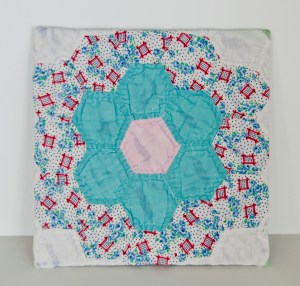
As I mentioned in an earlier post, I’m working on an artists’ book using an old family quilt. Originally I’d planned to use some lovely leftover pieces of Rives BFK for the inside pages. But it turns out, as I’m trying cover options, that in order for the cover to best display the quilt pieces it will need to be a larger book – so I’ll save those Rives BFK pieces for a future project.
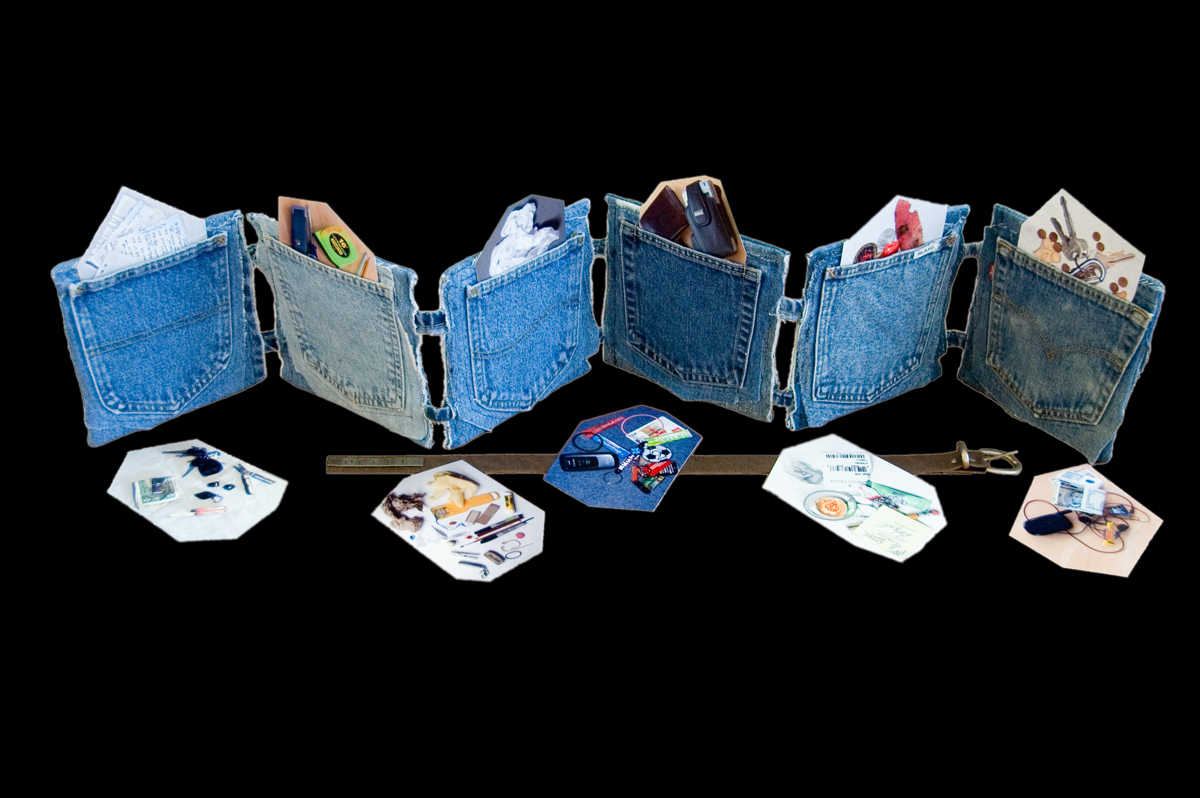
I didn’t want floppy covers so sewing them without an internal structure wasn’t really a choice. I considered sewing fabric sleeves to insert the Davey board into – as I did here with jeans, in Pockets:

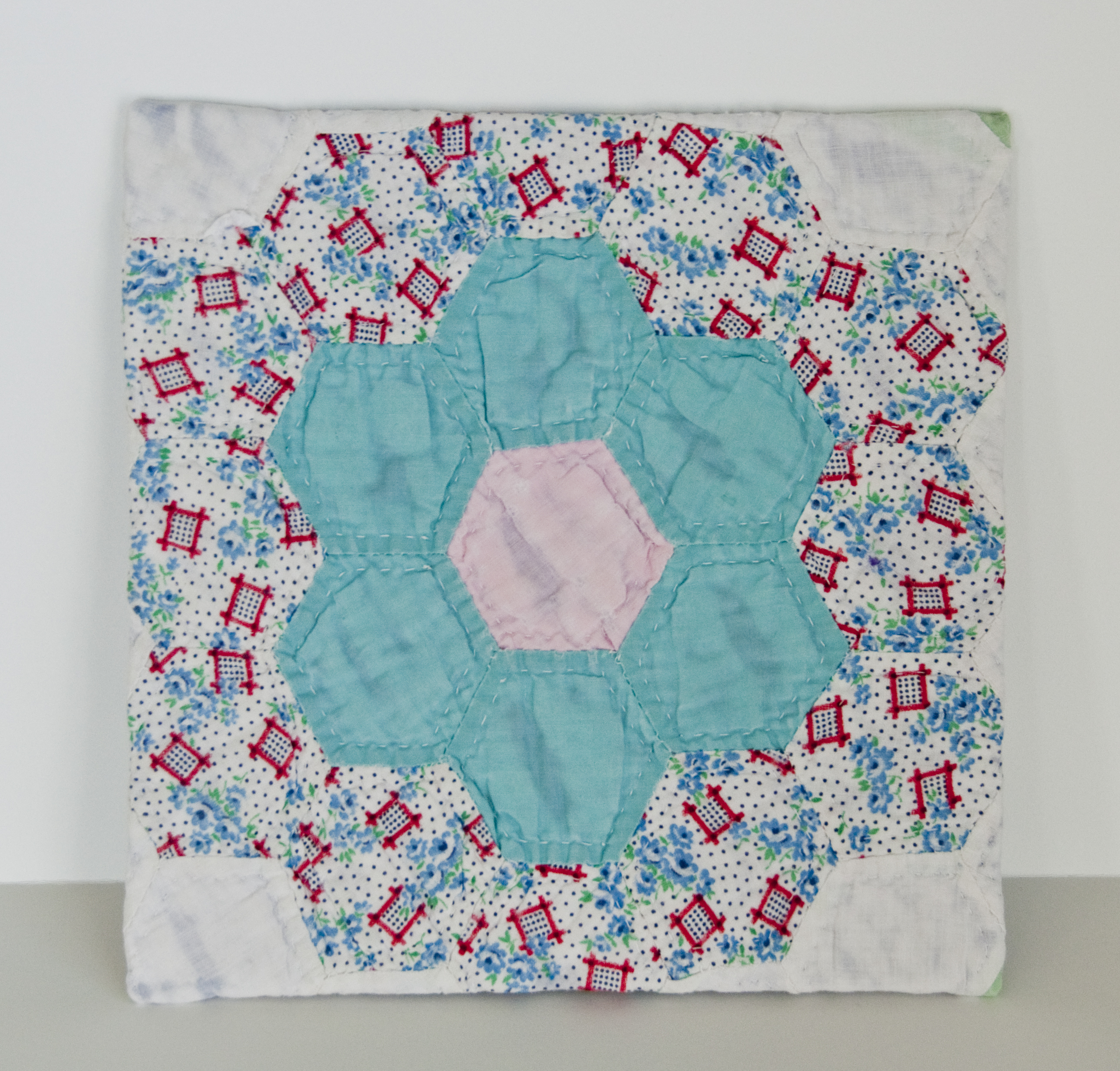
But I finally decided to use the actual quilt pieces as the covers. I’m using them like book cloth, wrapped around Davey board. This affects the artists’ book not only in necessary cover size but also in limiting the edition size. I like that each book about the quilt will come with it’s own pieces of the quilt.
Using the quilt with book cloth is a bit more interesting than I expected. I find that I have to use a lot more glue than I would with book cloth or cover-weight paper and that there is a lot of holding-for-a-count of 30 to make the quilt stay where I want it. Below is a step-by-step if you are interested. Pardon the photos, they were taken quickly with glue-y fingers and in kitchen-table light.
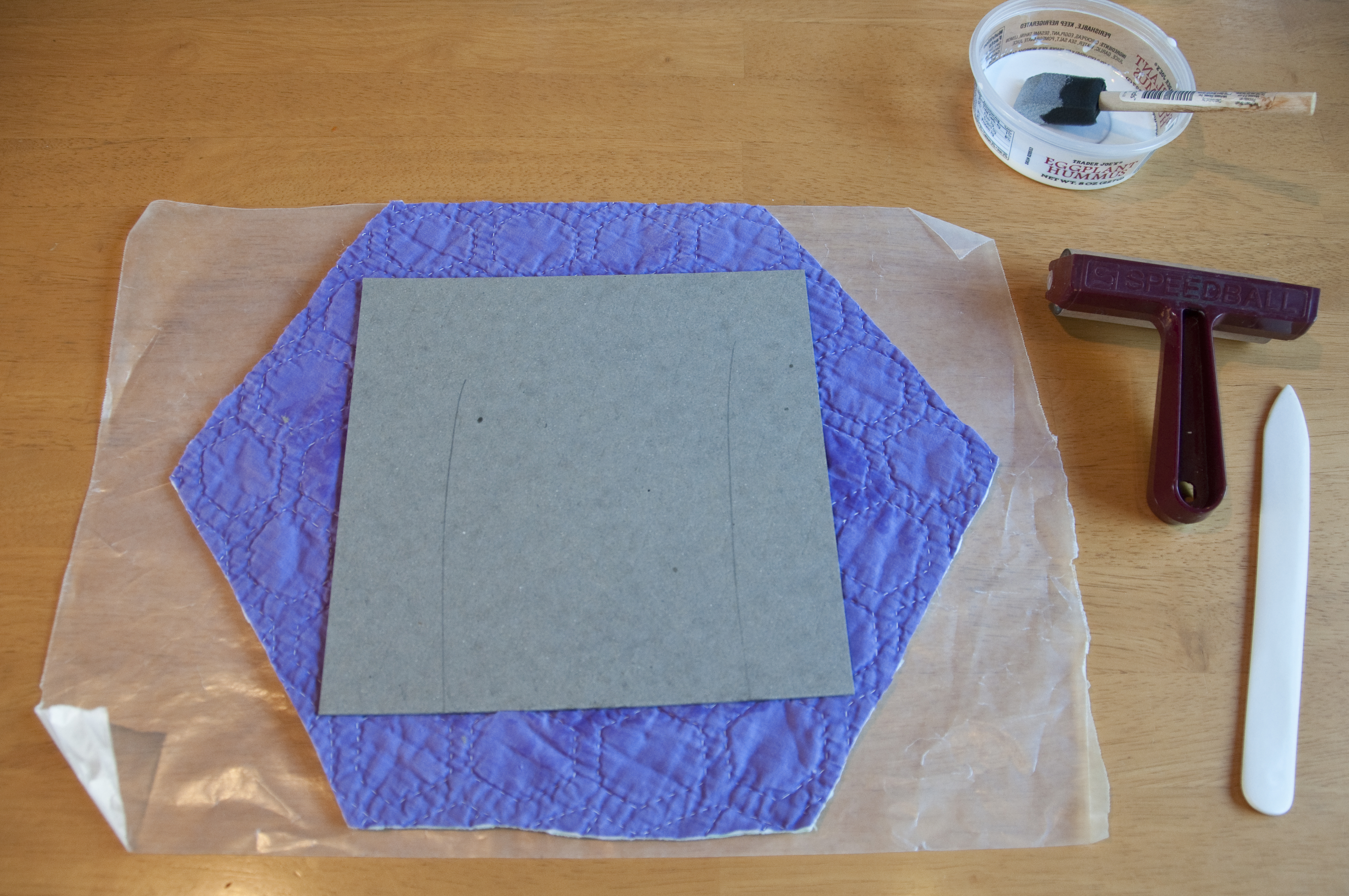
1. I applied glue to the Davey board and then applied it to the quilt. The lines on the Davey board are the grain direction. The quilt is an odd shape because it follows the quilt pattern. I decided that rather than cutting it down further I would try to use it in this shape. I used a brayer after every step in gluing so as to get the best possible contact between the fabric and the board.
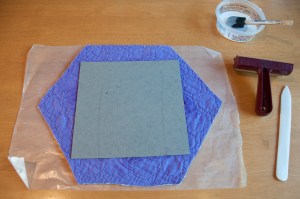
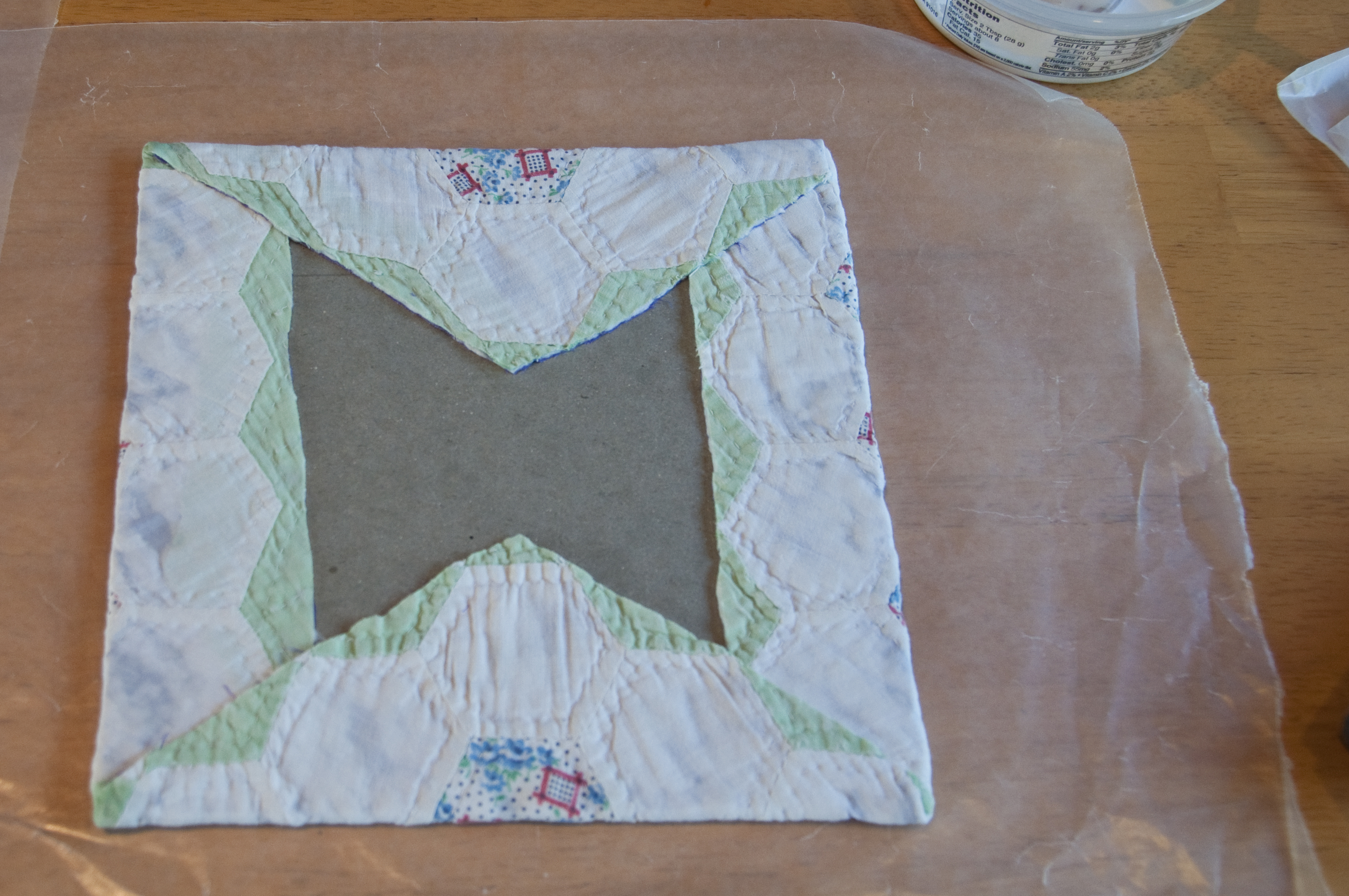
2. I applied glue to the top and bottom turn ins. Rather than using scrap or newsprint under the quilt I used waxed paper. I found the whole process to be much messier and stickier than when using bookcloth or paper.
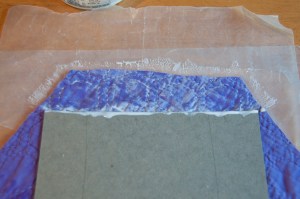
3. I used my fingers rather than a bonefolder to fold over the fabric. I wanted to get even tension and found that I had a lot more control with my fingers. The quilt was much stretchier than a usual cover material.
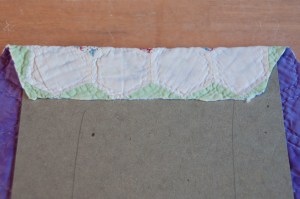
4. When turning in the corners I used some glue and held the corners in and down until they held.
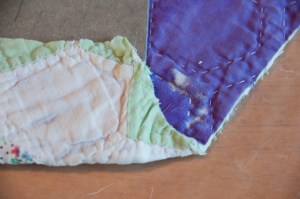
5. Finished corner folded in.
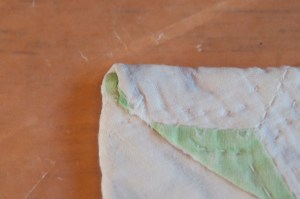
6. The front piece of the quilt glued onto the Davey board. I decided in order to get even pull front and back that I had to use another piece of the quilt as the back side. I used the pieces that are in lesser shape as backing pieces. I wish now I’d kept all of the edging (which would have been large enough to use here). Note to self: keep all of the pieces until the project is done!
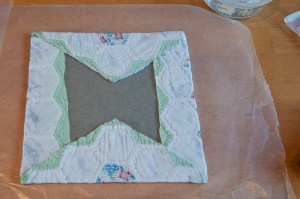
7. Finished cover (not dry – you can see the glue has made the fabric temporarily translucent.) I’ll dry it overnight under heavy weights – between waxed paper sheets.
~Ginger
www.gingerburrell.com



 Midnight Musings